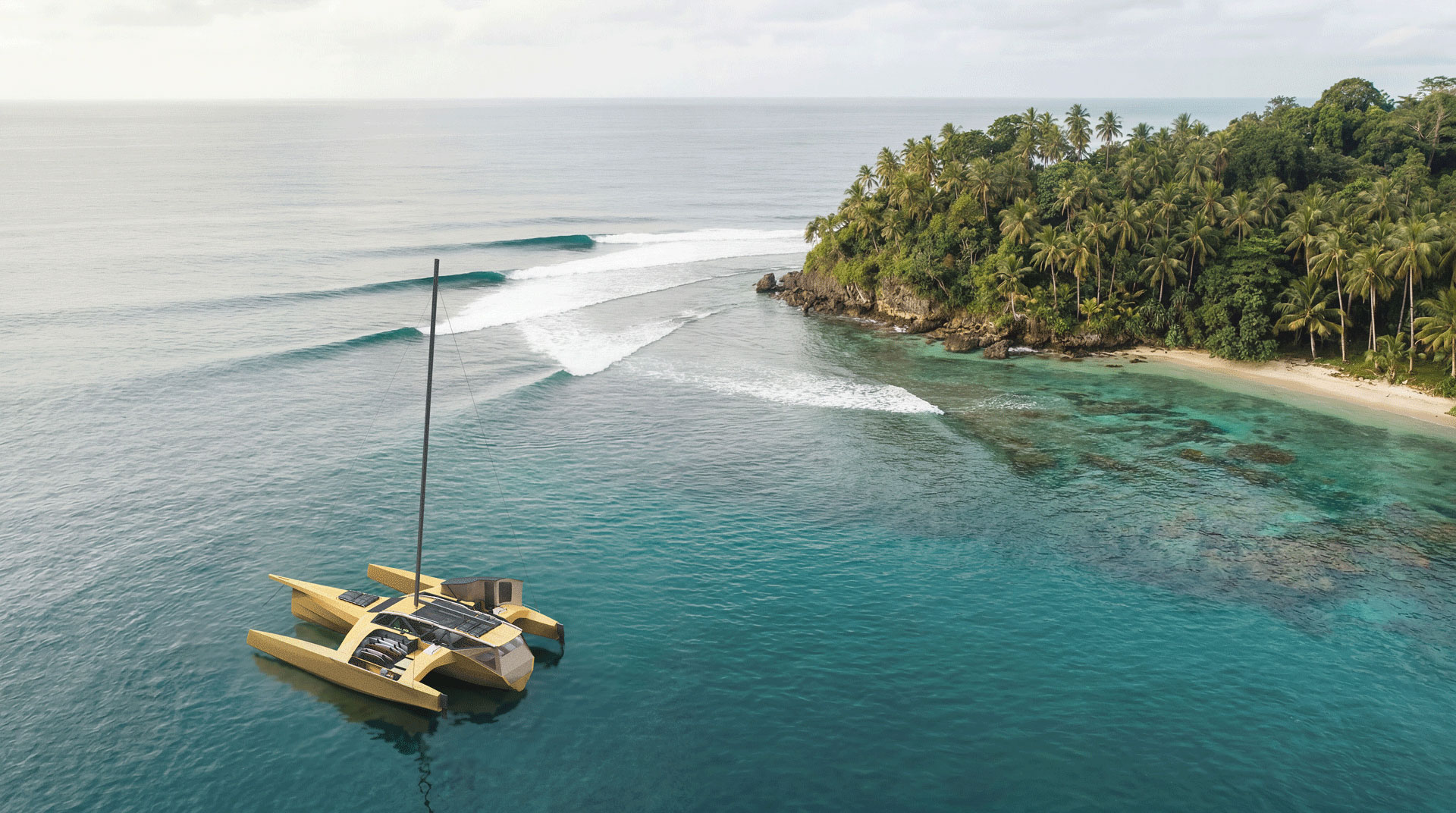
Designed with honesty at its core.
Shaped by what we wanted the boat to do. Skim, not fight. Glide, not push. The form is the direct consequence of the function.
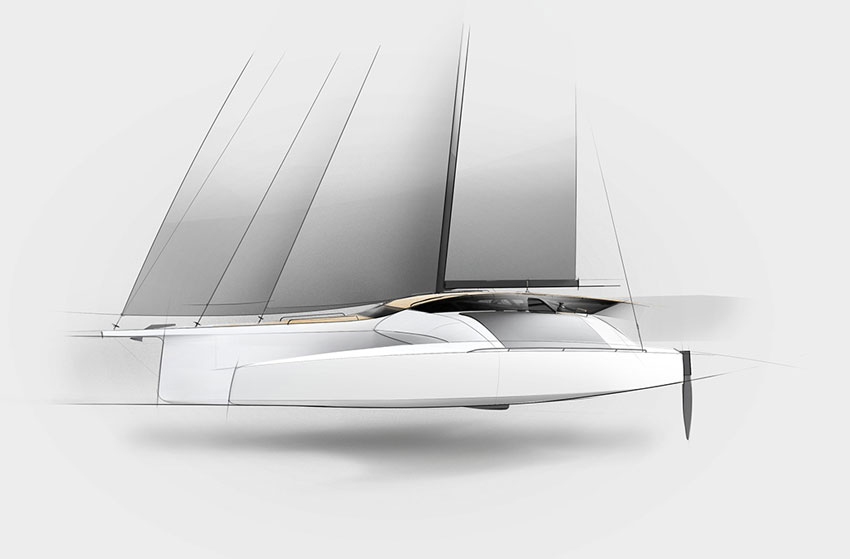
The Ipsum sits low on the water. Really low. The hull lines run long and stretched, drawn from the same Polynesian proa logic that Newick and Wharram were working from, redrawn with the CFD tools we use on ULTIM trimarans. Rounded where it matters. Taut where it counts. The bow pierces rather than pushes. The rocker is gentle, continuous, organic.
Specifications
LOA
14.20 m
Beam overall
9.15 m
Draft (boards up)
0.59 m
Draft (boards down)
2.20 m
2. The Roof
The structural roof.
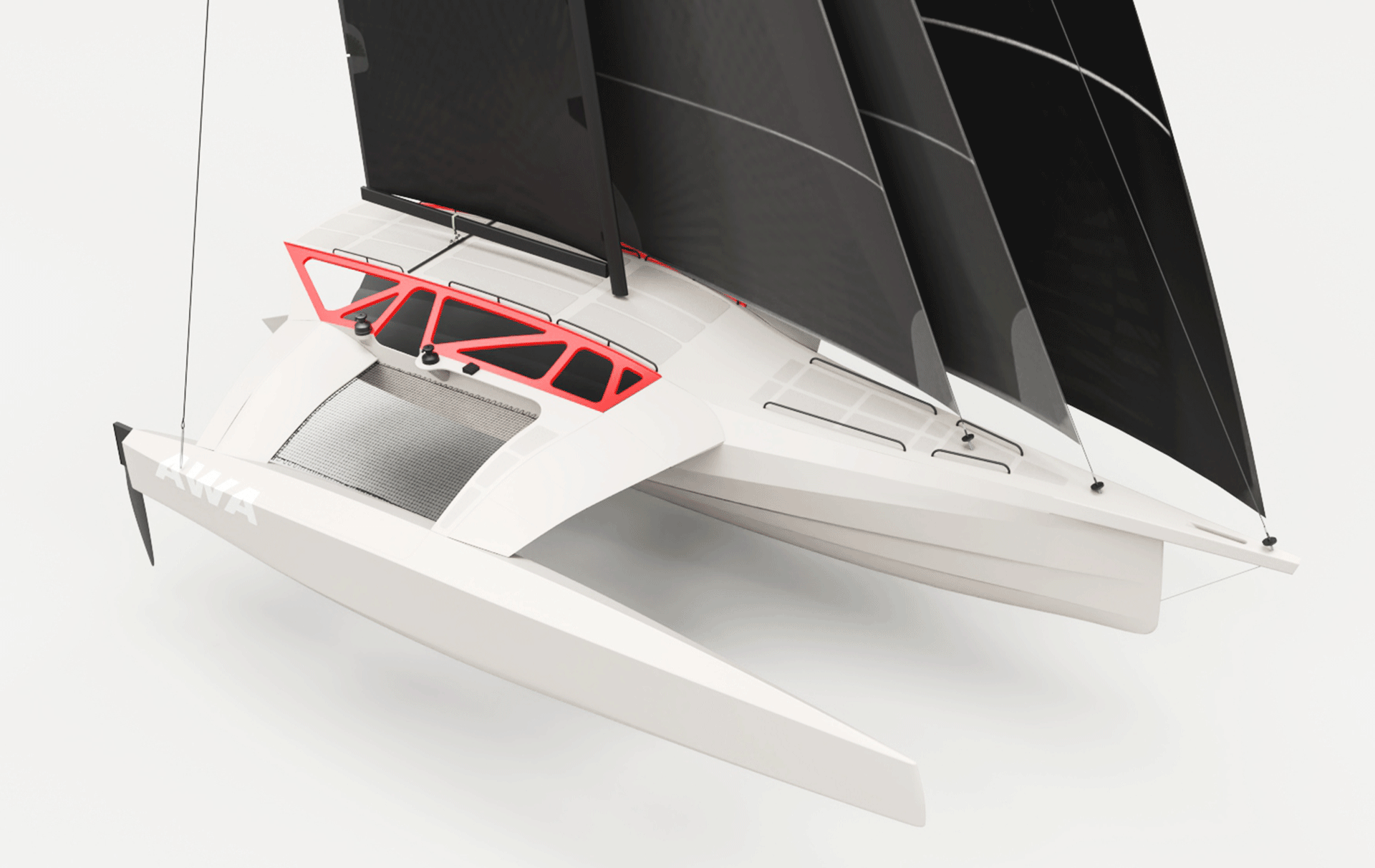
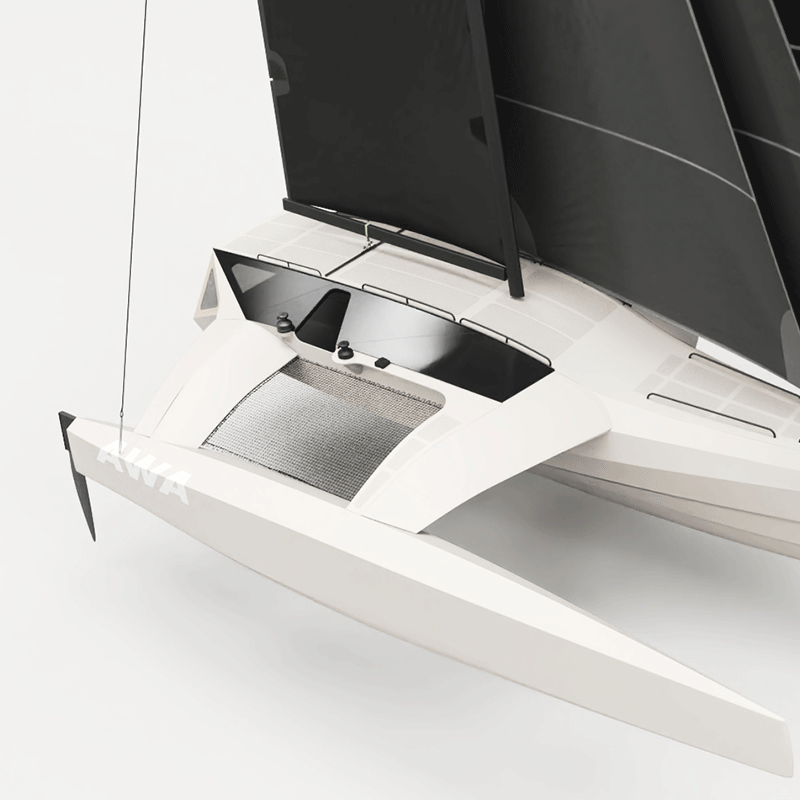
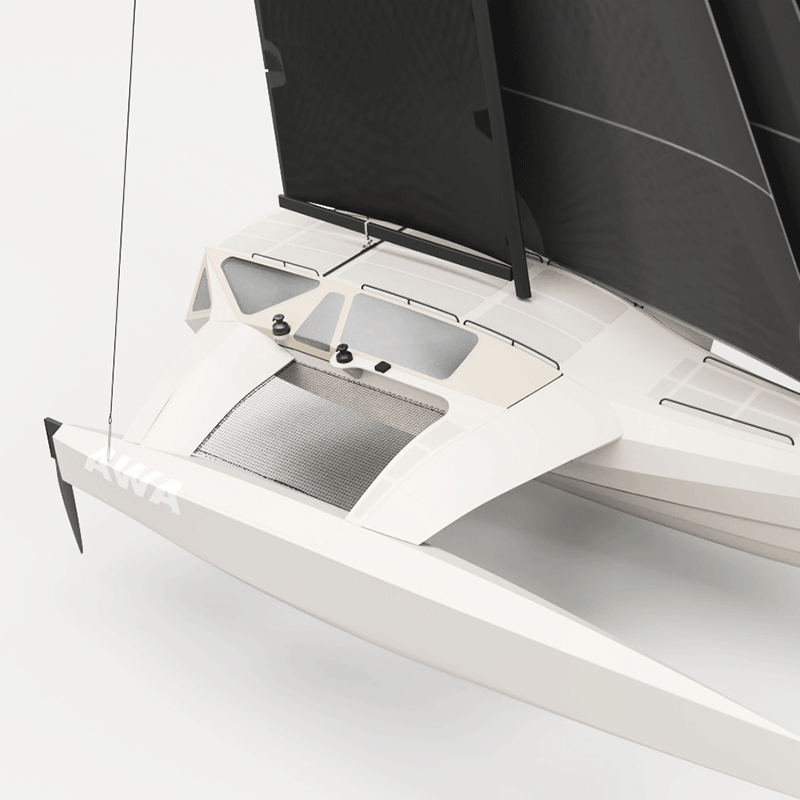
On the new Gitana 18, we needed a structural element capable of handling extreme loads across the full beam of the boat. When we applied this logic to the Ipsum 45, something remarkable happened: it created more interior volume than any other trimaran of this size. From there, we completely redesigned the cockpit, starting from this breakthrough.
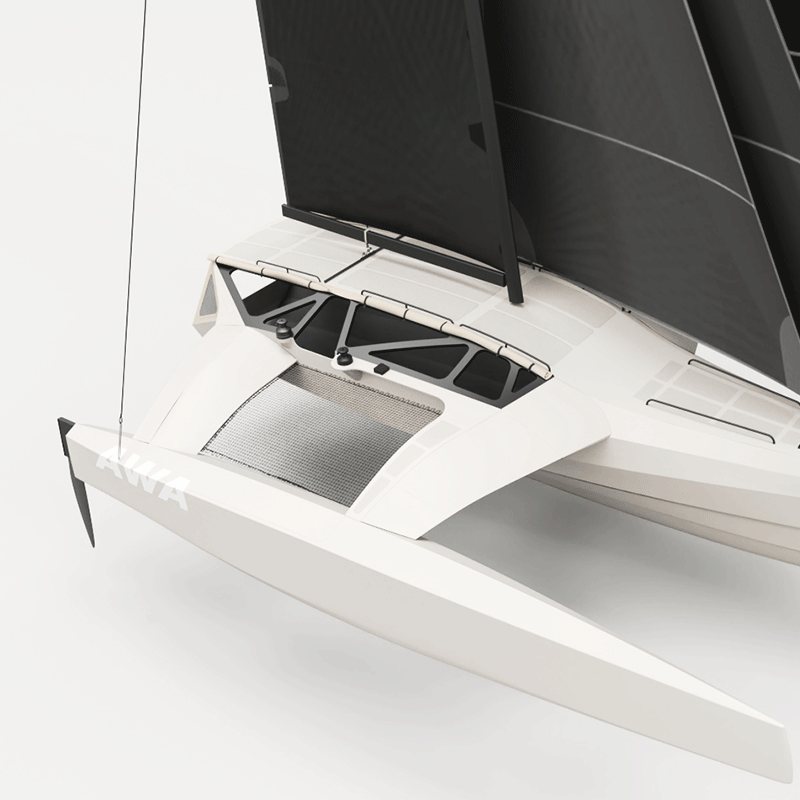
A continuous structure running bow to stern, carrying the rig loads, stiffening everything. Structurally derived from offshore racing, CE-certified for cruising. An open section brings light, air, and sky without compromising protection. You are inside and outside simultaneously.
The roof structure is designed to work in two ways.
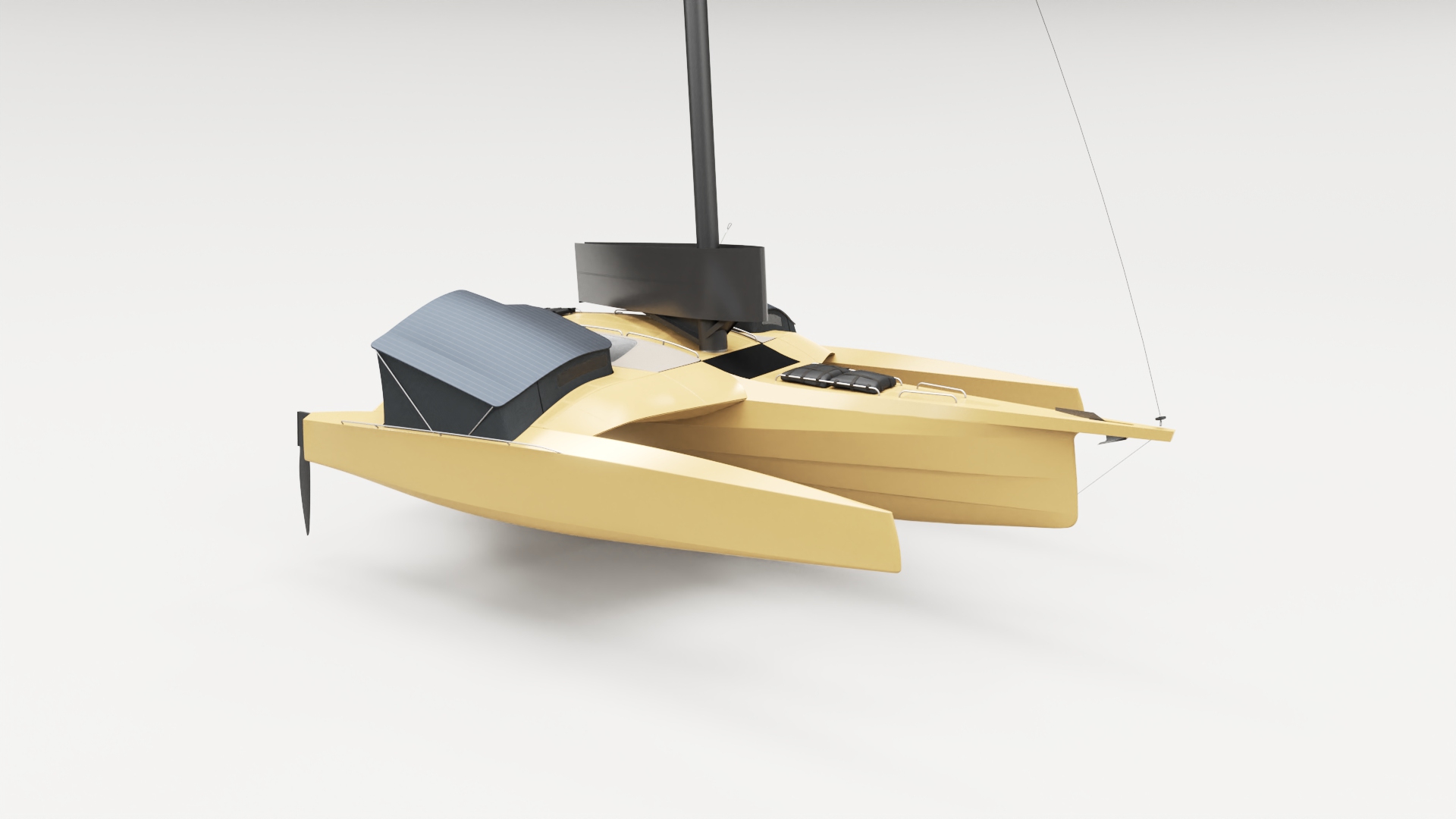
Left open, with removable covering. It is the purest version, 360° visibility, total connection with the elements, the sky above you and the horizon in every direction. For racing, a lightweight technical fabric cover drops over the structure in minutes, adding almost nothing to the weight while keeping the cockpit clean and protected. And for those who want full weather protection without giving up the view, plexiglass panels transforms the space into a completely transparent, that feeling of being outside while staying inside. In all configurations, the CE certification holds. The boat was designed for each of them from the start.
3. The Cockpit
Face the sea, not the spray.
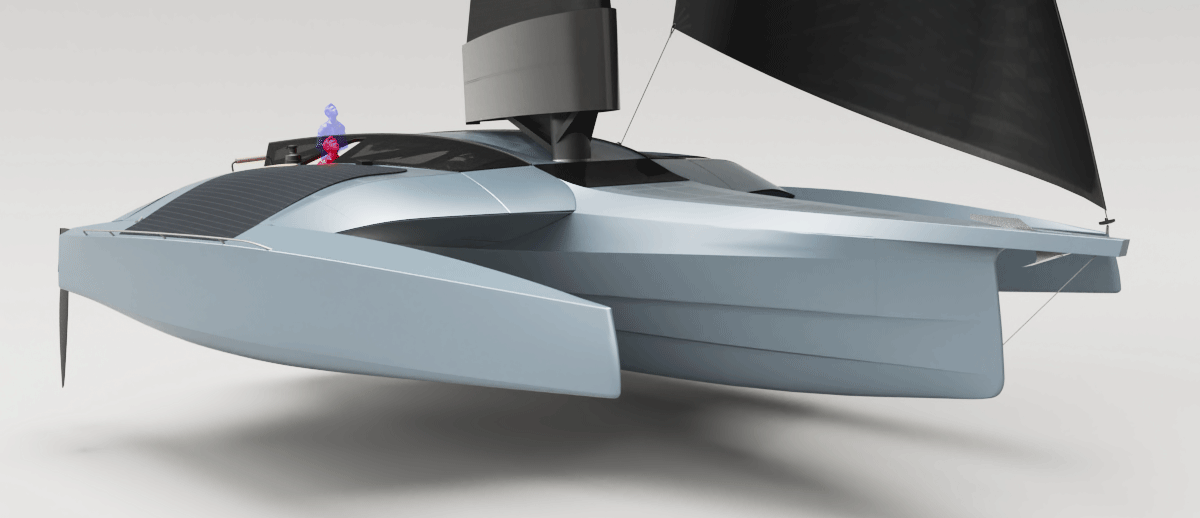
We never really questioned why boats leave you exposed until you're flying at 30 knots. On the Ipsum, the cockpit redefines that reality: full protection, effortless control, and uncompromised comfort, no matter the conditions.
You helm from within the roof, sheltered, focused, with a clear view of the horizon. It's the same philosophy we developed on Gitana 18. The world's best sailors don't stand in the rain, and neither should you.
A direct connection to the sea, two helm stations are positioned on each side of the roof, allowing you to steer seated or standing, depending on your style and the moment. And when conditions call for it, the boat can also be fully controlled from inside, thanks to a steer-by-wire system, comfortably settled into one of the watch lounge pads.
Cockpit protection
Full roof coverage
Visibility
270° from helm
Helm positions
2 (wheel + tiller)
Drive-by-wire wheel
Recommended offshore / short-handed
Precise, comfortable, with electronic actuation. Designed for long passages, short-handed sailing, and night watches. The kind of helm you can manage with two fingers, even remotely.
Direct-drive tiller
Recommended racing / day sailing
Immediate, physical, tactile. The tiller extension connects you directly to the rudder. You can feel every decision the boat makes before you've consciously made it. The tiller also lets you feel everything: when the boat is under strain, when she's out of tune, when you're pushing her too far.
4. Beam Options
The beams are where the identity of your Ipsum really takes shape.
Beams are the fundamental choice between two philosophies. Neither is a compromise.
Classic Net Setup
The purist's choice.
Nothing between you and the elements. Open, taut, minimal. Performance nets stretched between the beams, wind everywhere, nothing between you and the water. Visceral. Physical. The trimaran in its purest form.
Clear beam span: 9.20 m / Net surface: 2x6.5 m2
The Newing
What if the space between the hulls was the best room on the boat?
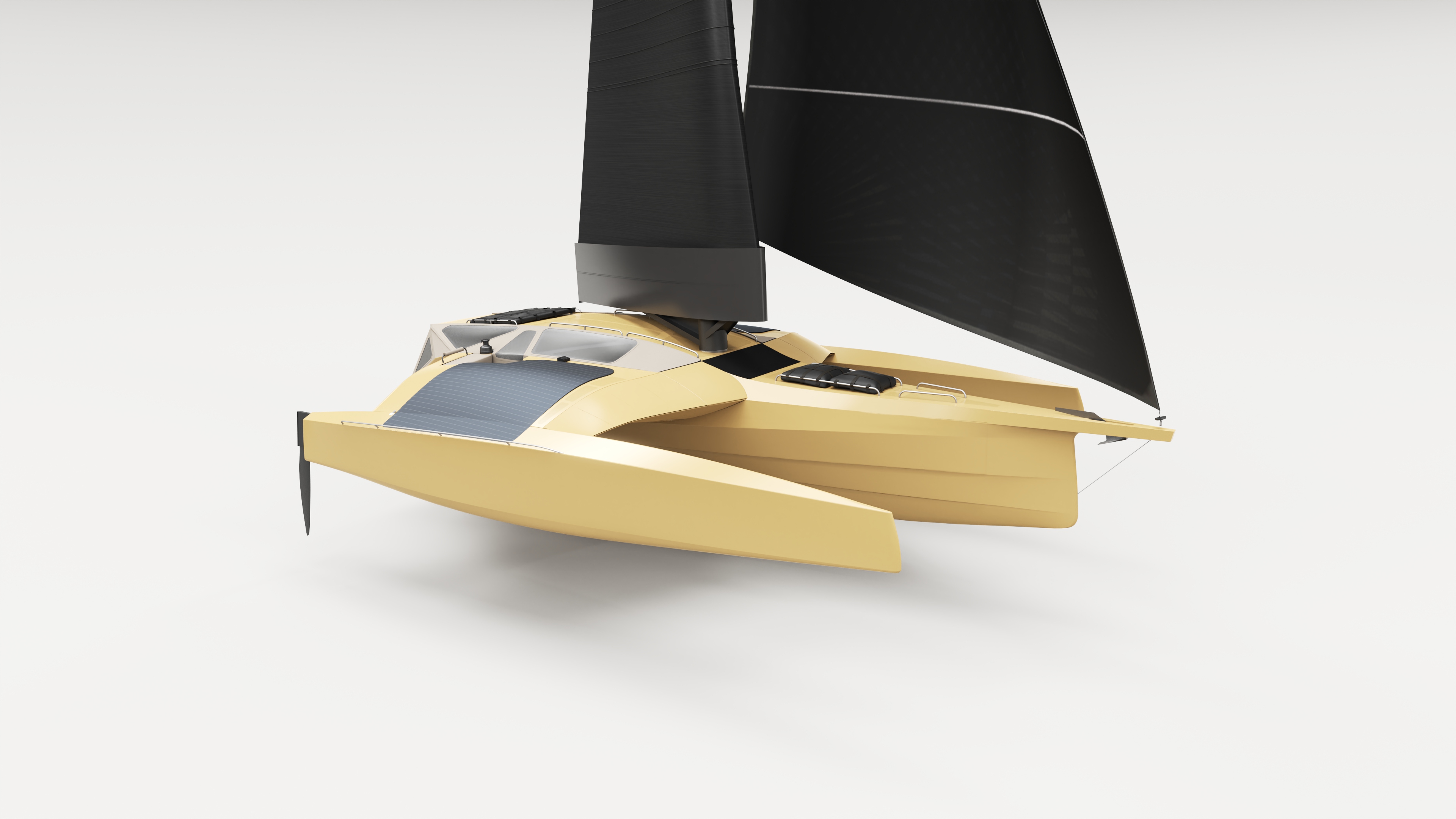
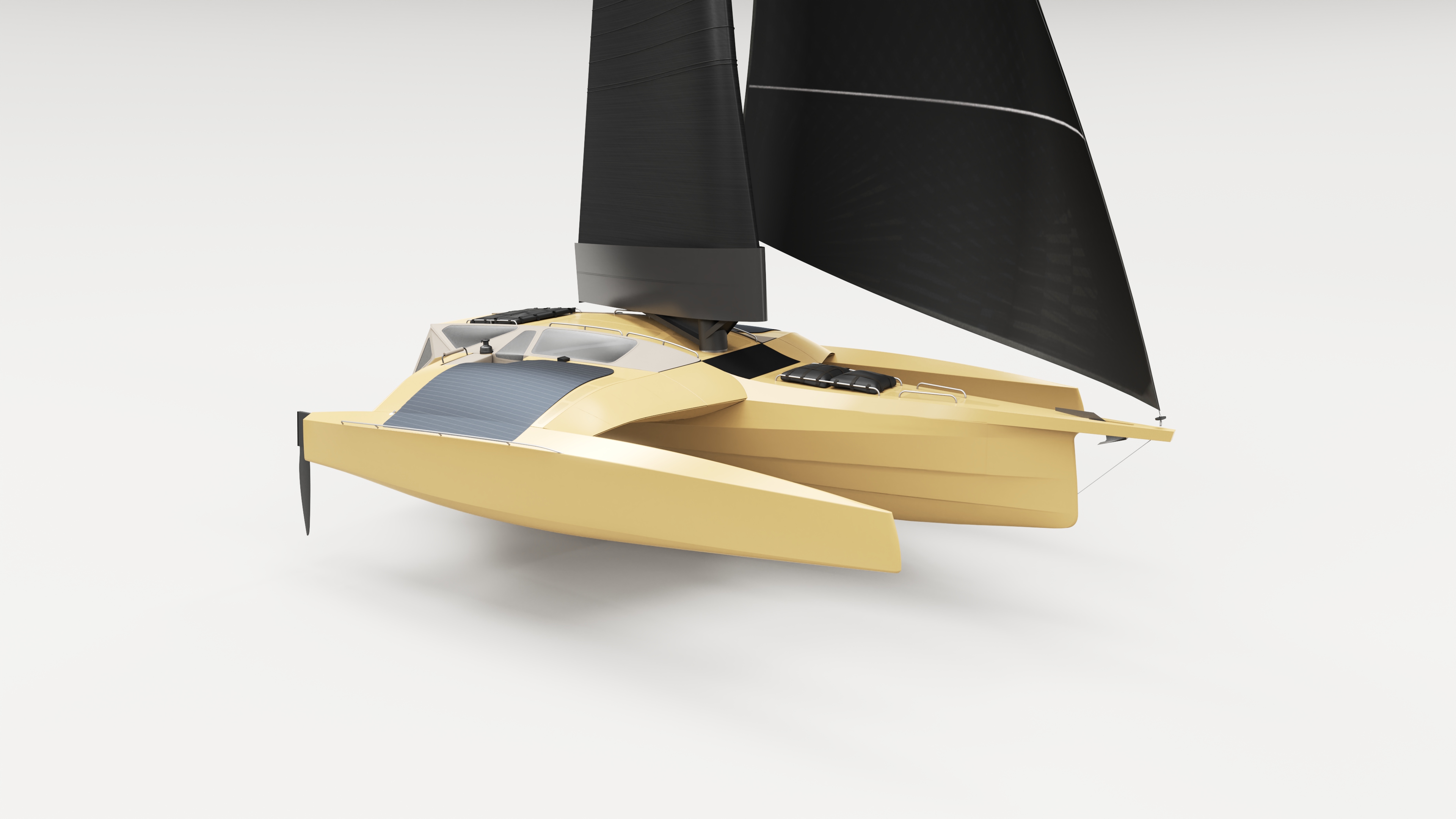
A single aerodynamic structure that closes the interbeam space and creates a volume that simply doesn't exist on any other 45-footer. Topped with solar panels. Open at the sides. A wing that lifts the performance and creates the interior simultaneously.
Interbeam volume: 5 m3 / Solar: up to 2x7 m2 (2.8 kW)
Exterior Specifications
LOA
14.20 m
Hull length
13.00 m
LOA Floats
10.90 m
Beam overall
9.15 m
Draft main hull
0.59 m
Draft (boards down)
2.20 m
Headroom
2.10 m
Displacement (carbon)
from 4.0 t
Displacement (CP-epoxy)
up to 7.5 t
Part Two
Interior
Built modular. Lived personal.
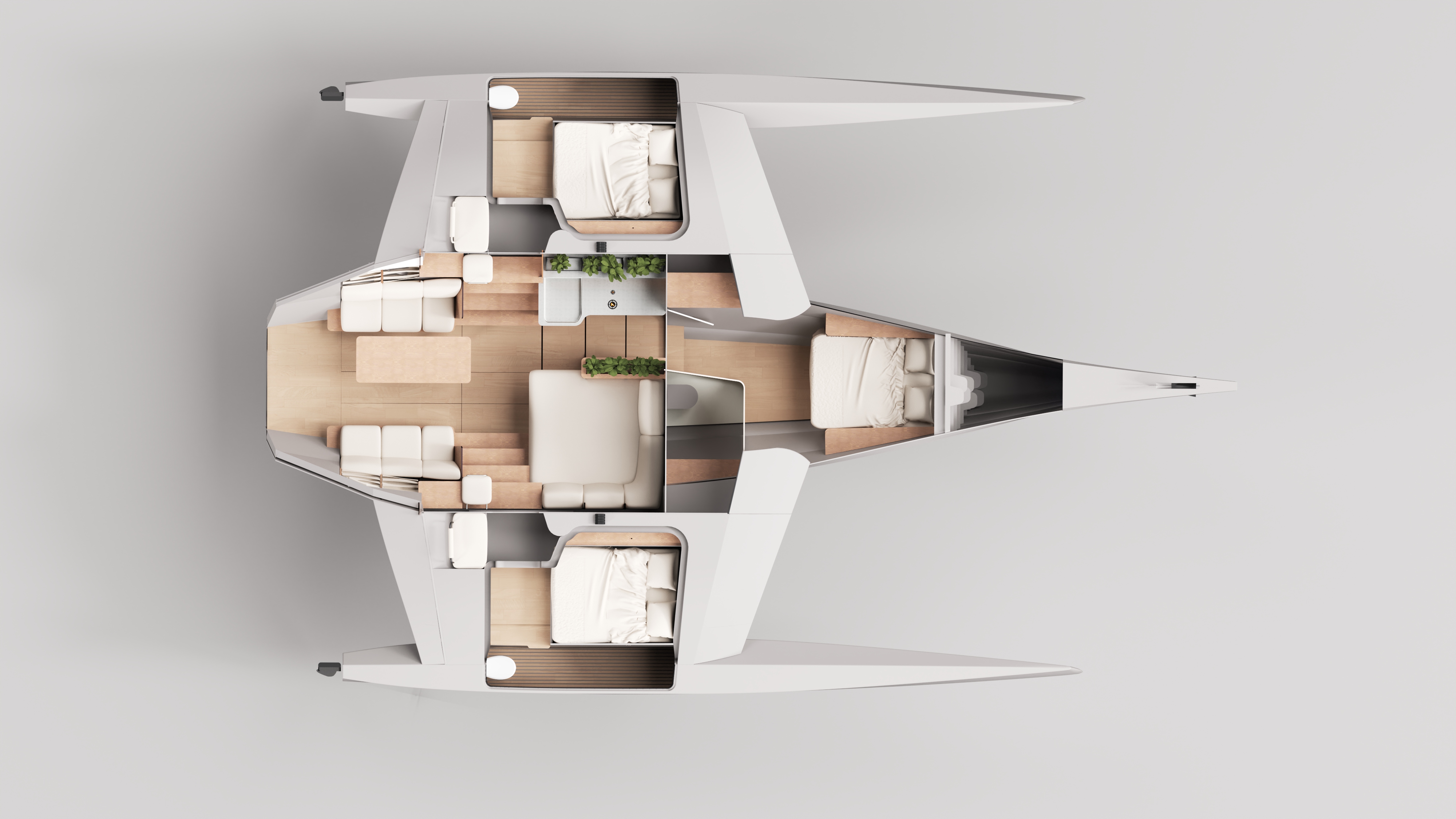
The central hull of the Ipsum 45 offers one of the largest open volumes ever built into a 45-foot performance trimaran. More space, more light, more freedom to decide what life on board actually looks like for you.
Two interior layouts are available today. More are on the way, designed by people we trust, each with their own vision of what a trimaran interior can be.
And if neither is quite right, AWA's design studio can work with you directly. Or bring your own team. Or leave it empty, some of the best sailors we know prefer it that way.
The structure supports all of it. The vision is entirely yours.
No structural bulkheads. Really
On a conventional sailboat, the interior is structural. Bulkheads carry loads. Ceilings are bonded. Furniture is laminated. Changing the interior means dismantling the boat. This is how the industry has always worked, and how obsolescence enters through the companionway.
We solved it differently. On the Ipsum, all structural loads travel through the roof. The central hull is a free volume. No structural bulkheads required. No laminated furniture. No permanent anything.
The only exception: the ACC Wing configuration requires a structural bulkhead at the mast position.
We developed a dedicated mounting system specifically for this with a way to install, remove, and replace interior modules without structural consequences. Screw in, unscrew, change. The interior becomes a component, not a commitment.
What this changes
- Tastes change. The boat changes with them.
- Designers can propose new interiors without touching the structure.
- Owners can upgrade, modify, or strip back at any point in the boat's life.
- Second-hand value is preserved — the next owner starts fresh, not compromised.
- Planned obsolescence, eliminated.
Structural bulkheads (standard)
0
Structural bulkheads (ACC)
1
Mounting system
Proprietary AWA
Interior changeability
Full
Built for adaptation. From day one.
Most boats are designed to be sold. The Ipsum was designed to be lived in, adapted to.
Mast position — up to 1 metre of travel
The mast position can be adjusted up to one metre fore or aft without any major structural modification. Change your rig philosophy, optimise for a different sail plan, adapt to a new configuration, the boat accommodates it.
1.00 m
fore/aft travel
Keel options & multiple configurations
The Ipsum accepts multiple keel formats: pivoting, lifting, fixed. A genuine structural openness to different performance and depth requirements.
Pivoting / Lifting / Fixed
formats accepted
Strategic inserts, everywhere it matters
Douzens of structural inserts are positioned throughout the hull and arms at the locations where hardware, equipment, and fittings are most likely to be needed. No drilling through unsupported laminate. Every attachment point is pre-engineered and pre-reinforced.
Distributed
at key points
Through-hull / place them anywhere
The hull bottom uses a construction technology that allows through-hull fittings to be placed virtually anywhere , not limited to a handful of pre-designed locations. Transducers, depth instruments, watermakers, outlets, intakes.
Anywhere
on hull bottom
Free interior volume / no structural constraints
The central hull is a completely open volume. No internal structural bulkheads dictate the layout (with the single exception of the ACC Wing mast bulkhead). Any interior configuration is possible. Any future reconfiguration is possible.
100%
configurable
A boat that evolves with its owner is a better boat. One that doesn't force you to sell when your life changes. One that better holds its value because it never becomes outdated.
6. The Central Hull
The main interior.
For years, we watched people rattle around enormous boats. Two people, six cabins, too much sail, too much everything. The boat serving the boat, rather than the people in it. We wanted to offer the same sense of space, in a much more focused package.
3.4 metres wide in the central hull. Interbeam volume on top of that. A structural roof overhead. We became slightly obsessive about it, low furniture, the largest possible relaxation areas, a proper kitchen, a real dining table, a full master suite. It all fits.
On a 45-foot boat that sails at over 25 knots. Until you see it, you simply don't believe the space is real.
A similar sized monohull plan fits inside the Ipsum.
Interior Options
Race / Bare
Stripped. No furniture. Structural surfaces only. For the builder who wants to start from zero or race without weight.
Included in Master Kit
CP Pre-cut
Pre-cut plywood interior panels, ready to install. A practical, light solution for builders who want a proper finish without full custom cabinetry.
Escape Pod Custom
Full custom interior by European specialist yards. Bespoke cabinetry, upholstery, finishes. The level of a high-end superyacht interior, on a boat that actually moves.
Interior beam
3.40 m
Headroom
2.10 m
Saloon length
6.00 m
Galley length
1.90 m
Master cabin
4.00 m x 2.60 m
Master cabin (tapering)
to 1.30 m
Berths total
4 to 8
7. The Newing Interior Volumes
What if the space between the hulls was the best room on the boat?
The interbeam space on most trimarans is either empty or filled with a trampoline. We kept asking ourselves, what if it was the best room on the boat? It took a while to figure out exactly what to do with it. Then it became obvious. A single aerodynamic beam structure that creates usable volume between the hulls. Open on the sides, covered overhead. Three visions, all from the same space.
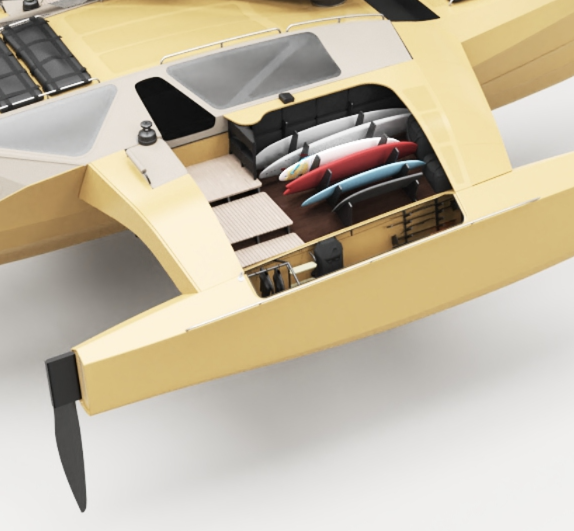
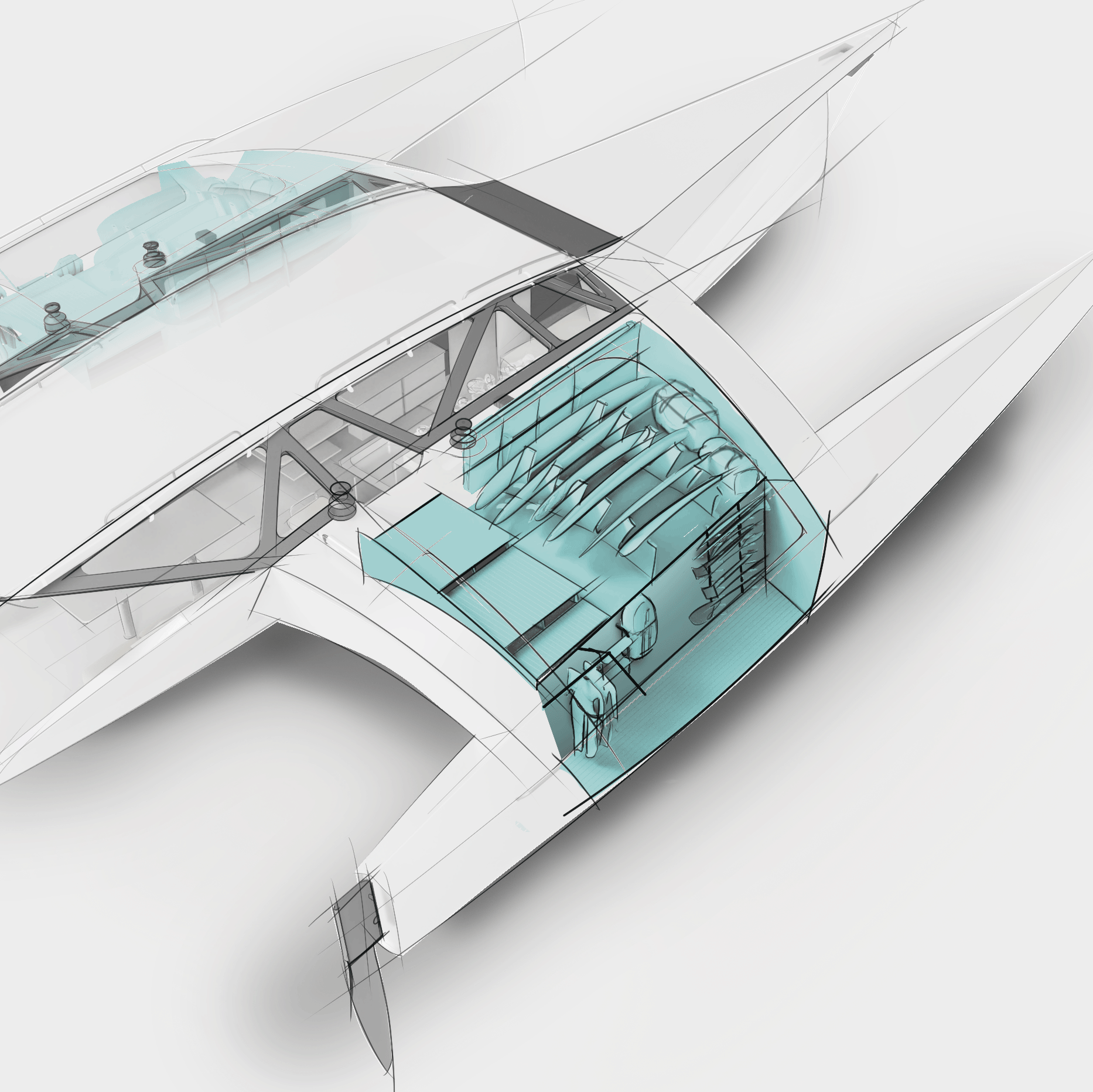
Option A : The Adventure Hub
Your basecamp on the water.
The people who want to sail fast are usually the same people who want to surf, foil, kite, dive, and paddle. And they've always had to choose between their boat and their gear. Not anymore.
Everything stows. Everything is protected. Everything is ready when you get there, wherever there turns out to be. Surf, foil, kite, wing, diving, kayak.
The boat doesn't take you to the playground. It is the playground.
Volume
5 m3
Internal height
1.10 m max
Internal width
2.70 m max
Load capacity
500 kg max
Option B : The Escape Pod Suite
Van-Life. Applied to offshore.
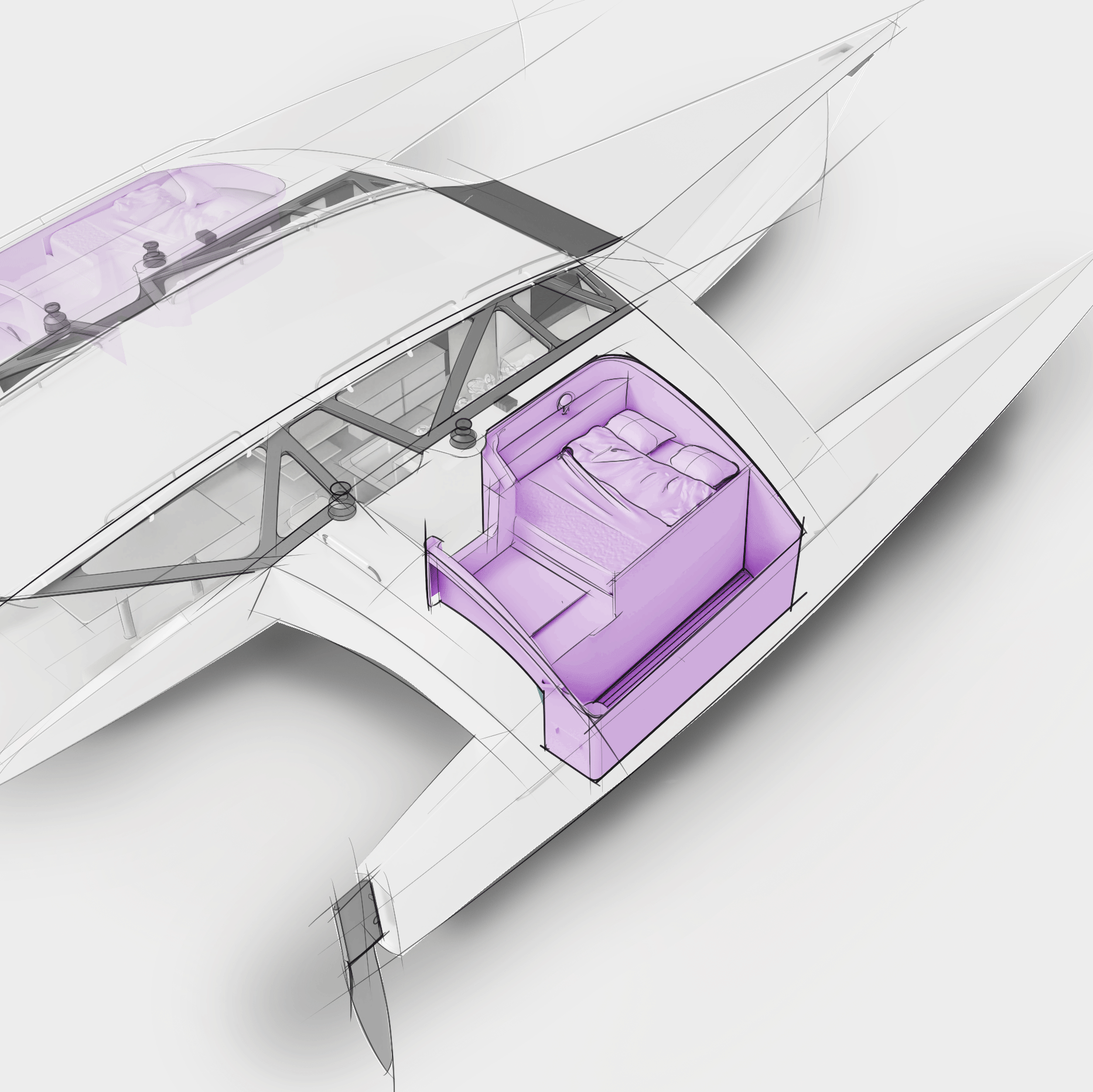
In most trimarans, the floats are wasted volume. We turned the starboard float into the best place to sleep on the boat.
Independent entrance. Integrated bathroom. A berth one metre and half above the water surface. At night, lying there, listening to the hull move through the water, looking out at the open ocean through a mesh screen.
Your guests have their own suite on the water.
Berth above water
1.30 m
Berth dimensions
1.40 m x 1.90 m
Bathroom
1.50 m2
Entrance
Independent
Option C : Your Script
We have ideas. You have better ones. That's the point.
The Newings are a blank canvas.
A workshop. A dog cabin? yes, Newfoundland-sized. A photography studio. A meditation space. A dedicated kiteboarding prep area. A private art studio...
Configurable volume
5 m3
Structure
Included in Newing Kit
Fit-out
On request
How it works.
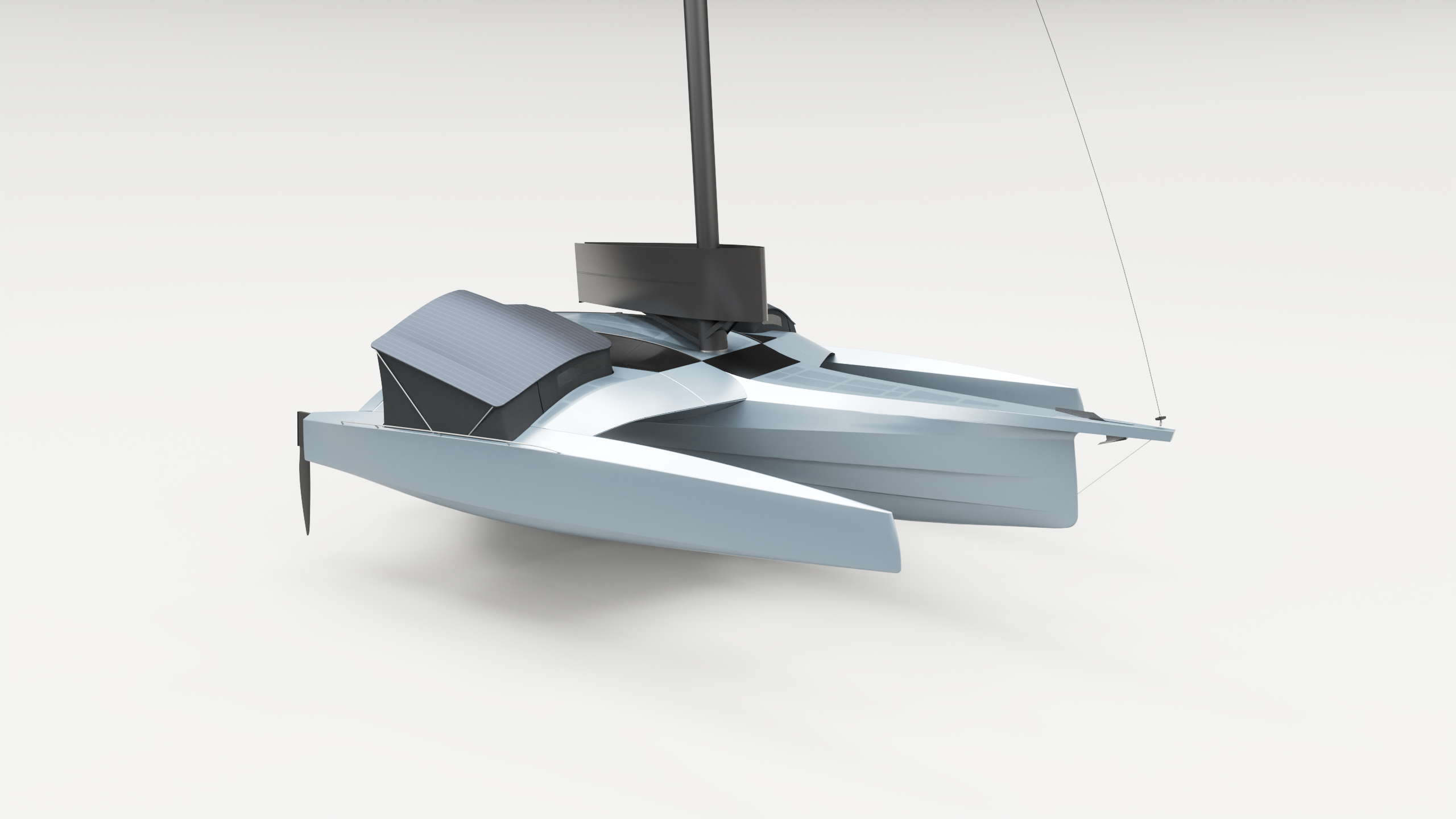
Each wing deploys and folds back in minutes. At sea, the structure closes completely, weathertight, secure, protecting everything inside from spray, salt, and movement. At anchor, gas-assisted springs open it in one motion. What was a sealed compartment becomes 5 cubic metres of usable space on each side.
The top is a composite lid, which can be fitted with solar panels, turning the structure into an integrated power-generating surface. Up to 2x7 m2 (around 2.8 kW)
It disappears when you're sailing, and reappears when you arrive. Whatever you put inside, gear, a bed, a workshop, a studio, is exactly where you left it, dry and ready.
Scroll to explore the Newing configurations
Interior Specifications
Interior beam (main hull)
3.40 m
Headroom throughout
2.10 m
Saloon length
6.00 m
Galley length
1.90 m
Master cabin
4.00 m x 2.60 m
Guest cabin (Escape Pod)
1.40 m x 1.90 m
Bathroom (Escape Pod)
1.50 m2
Navigation station
Integrated
Berths total
4 to 8
No rendering replaces real volume.
We built a complete Meta Quest VR experience for exactly this reason. Walk into the boat. Move through the wing. Lie down in the Escape Pod Suite and look at the water through the mesh screen. Thirty seconds and you'll understand what three pages of specifications cannot tell you.
La Grande Motte — 22 to 26 April 2026 — Stand H14
VR experience by appointment. Sea trial on the ACC Wing prototype at the pier.